
We all reach a point where we need to step away to remember what peace and quiet feels like. Life keeps us moving in every direction, all on its own schedule. Work picks up, the house goes through a remodel, and health scares pull at our attention. The noise adds up fast, and that’s exactly why five days in Yosemite backcountry at one of our favorite national parks felt so good!
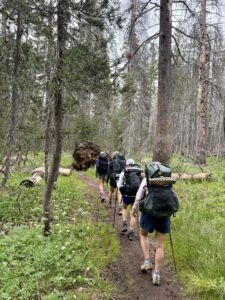
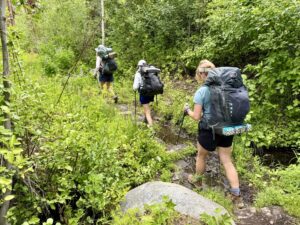
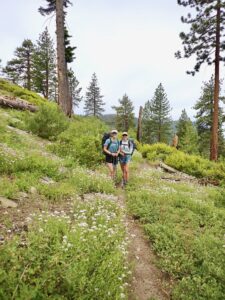
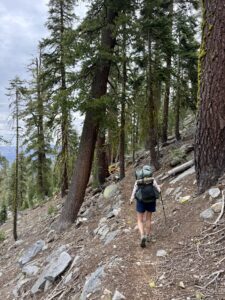
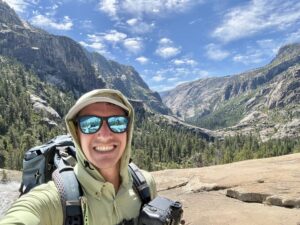
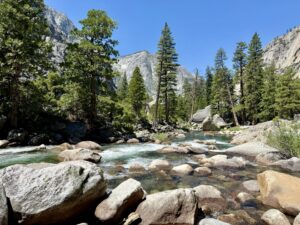
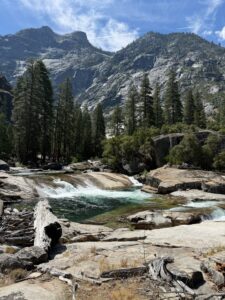
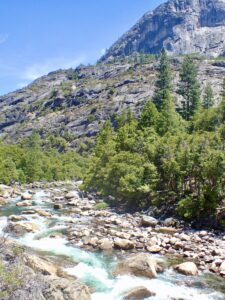
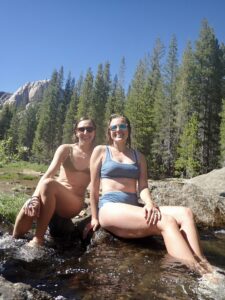
We packed our bags and spent five days in Yosemite’s backcountry, tracing the Grand Canyon of the Tuolumne, a route built around water. We crossed rivers, swam in alpine lakes, camped beside waterfalls, and walked past snow still holding on in the high country. There’s a name for what water does to an overloaded mind. Wallace J. Nichols calls it “Blue Mind”: “a mildly meditative state characterized by calm, peacefulness, unity, and a sense of general happiness and satisfaction with life in the moment, which is triggered by proximity to water.” Five days near, in, and on water during our 5-day, 36-mile backpacking trek left us recharged, carrying peace and calm from our vacation in the rhythm of everyday life.
Destination Insights

Yosemite National Park
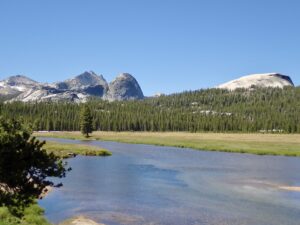
Most people picture Yosemite Valley (e.g. Half Dome rising over the meadow, El Capitan’s granite face lit up at sunset, Yosemite Falls thundering in spring). Instead of spending our trip in the busiest seven square miles, we wandered throughout the other 1,200 square miles Yosemite National Park has to offer. We spent our five days exploring the high country around Tuolumne Meadows, where the granite opens into wide alpine meadows threaded by the Tuolumne River.
Backpacking in Yosemite’s Backcountry
Backcountry routes like ours require a wilderness permit, which works on a quota system: 60% of spots open through a weekly lottery up to 24 weeks ahead of start date, then the remaining 40% release online seven days prior online or for walk-up hikers at the permit station. If you win the lottery, there’s a $10 application fee plus $5 per person.
Every trip into this wilderness comes down to protecting three things:
- Bears: Every overnight camper is required by law to carry food in a bear canister. Black bears live throughout the park and quickly learn to raid packs for high-calorie snacks like Snickers bars left unprotected.
- Water: Almost every water source in Yosemite becomes someone’s drinking supply downstream. Dig catholes at least 200 feet from any river, lake, or trail, and pack out your toilet paper.
- Land: Wildfire risk shapes Yosemite’s fire rules. Wood fires are banned below 6,000 feet and above 9,600 feet, and allowed only inside existing fire rings in between. Never walk away from a burning campfire or stove, since one spark can undo decades of recovery in an already drought-stressed landscape. To put a fire out fully, drown it with water, stir until cool, and press your palm to the ashes to check for warmth.
History
In 1864, Abraham Lincoln set aside Yosemite Valley and the Mariposa Grove of giant sequoias for federal government protected land specifically for public use. A year later, Frederick Law Olmsted, the landscape architect behind Central Park, wrote one of the earliest arguments for protecting Yosemite Valley because the scenery “employs the mind without fatigue and yet exercises it, tranquilizes it and yet enlivens it,” and that this kind of rest gives “the effect of refreshing rest and reinvigoration to the whole system.” John Muir wrote some of his most famous Sierra passages in this exact stretch of high country, and Ansel Adams found a lot of his sharpest black and white light here too. In 1890, Yosemite became an official national park and served as a template for the U.S. national park system.
Plants
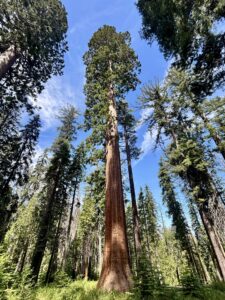
Yosemite is home to giant sequoias, the largest living trees on Earth. Over 500 giant sequoias can be found across three groves (Mariposa, Tuolumne, and Merced) within the lower Montane Forest (3,000 to 7,000 feet). Growing alongside giant sequoias, there’s also Ponderosa pines, Incense-cedars, White firs, and California black oaks. Climb into the Upper Montane Forest (7,000 to 9,000 feet), and Red fir, Lodgepole pines, and Jeffrey pines take over due to winter snowpack and shorter growing season. In the Alpine Zone (above 9,000 feet), only Mountain hemlock and Whitebark near the timberline.
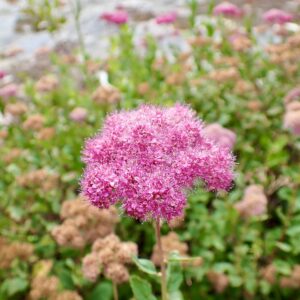
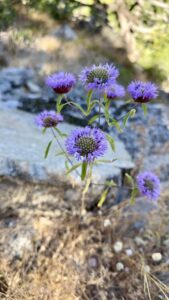
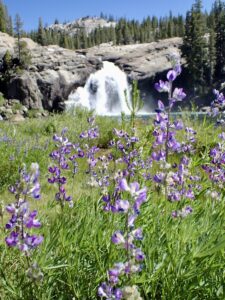
Yosemite puts on one of the best wildflower shows in the Sierra. Late summer, there’s meadows filled with colorful wildflowers like blue-purple lupine, scarlet paintbrush, and delicate pink shooting stars along the riverbank. Look closer and you’ll spot the golden-yellow Sierra butterweed carpeting the meadow floor, the blood-red snow plant pushing up through pine duff, and little elephant’s head raising tiny pink trunks toward the sky. Red and magenta tubes, like the paintbrush and penstemon, are built for hummingbirds, while the white alpine columbine glows for night-flying hawkmoths.

Wildlife
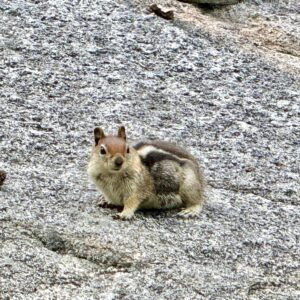
The canyon floor supports mule deer, black bears drawn to the oak acorns, and the occasional rattlesnake sunning on the trail, so watch your footing on rocky, sun-warmed stretches. Higher up, marmots stretch out on sunny granite slabs, and pika, small, round-eared relatives of rabbits, dart across the talus with a sharp, startled squeak. In the wet meadows near Tuolumne, listen for the Yosemite toad, a threatened species found nowhere else on Earth. In the high country, Clark’s nutcrackers and Steller’s jays call loudly. Keep an eye out for mule deer, black bears, marmots, and pika. Bird lovers can spot Clark’s nutcrackers and Steller’s jays.
Weather
The best time to backpack Yosemite’s high country depends on what kind of trip you’re looking for.
Summer (June through September) is the main season for the Tuolumne Meadows backcountry, once Tioga Road finally opens for the year. Days run warm and dry, but nights are cold above 8,000 feet. In July and August, afternoon thunderstorms roll in fairly often. We backpacked in early July – we started our hike with a rain sprinkle and ended our hike looking at patches of snow that were still holding on at the higher elevations.
Winter (November through May) closes the door on this route entirely. Tioga Road shuts with the first serious snowfall and reopens late May or early June, depending on that year’s snowpack. So Tuolumne Meadows is only reachable by ski or snowshoe.
The shoulder weeks, when Tioga Road opens in late spring and again in early fall, offer the fewest crowds but least predictable conditions. Snowmelt can leave river crossings running high and trails muddy well into June, so check current conditions before you commit to an early-season date.
Travel Guide
Day 1
| Time | Activity |
|---|---|
| Afternoon | • Roadtrip from LA to Lee Vining (5.5 hours) |
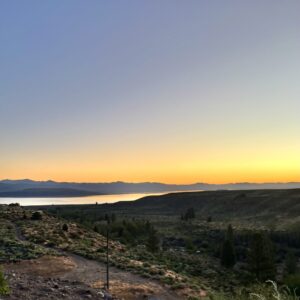
| Evening | • Dinner at The Basin Cafe: Salad, sweet potato fries, and strawberry lemonade hit the spot! • Night at Yosemite Gateway Motel: Enjoyed the stunning sunrise and panoramic views overlooking Mono Lake. |
Day 2
| Time | Activity |
|---|---|
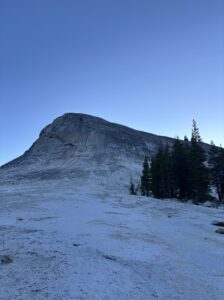
| Morning | • Road trip from Lee Vining to Lembert Dome (1 hour) • Park one car near Tuolumne Stables then hop in the second car for carpooling. Insider Tip: Street parking from Tuolumne Stables to Lembert Dome parking fills fast (we arrived at 6:30am with only a handful of spots open). If it’s full, the Wilderness Center and Dog Lake lots are your backup, or the paved shoulder and stables east of Lembert Dome. • Drive to Tuolumne Meadows Visitor Center. Insider Tip: We had 1.5 hours until 8am open, so we strolled to the Tuolumne Meadows Footbridge (1.4 miles). • Pick up wilderness permits. Insider Tip: Line started to form at 7:30am, so bring warm gear to hunker down and secure your spot. • Drive from Tuolumne Meadows Visitor Center to Tuolumne Grove Trailhead (50 mins). Insider Tip: Check out the view from Olmsted Point, with binoculars you can see hikers climbing cables on half dome! |
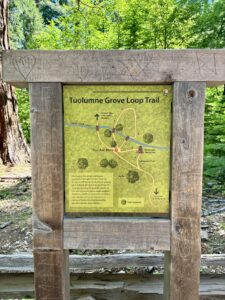
| Afternoon | • Hike Tuolumne Grove Trail (2.5 miles). Insider Tip: This low-key descent leads to massive, pass-through sequoia trees. • Road Trip from Yosemite to Mariposa (2 hours). • Lunch at Happy Burger, the veggie burger and french fries were delicious! • Dinner from Yosemite View Lodge, salad • Night at Yosemite View Lodge. Insider Tip: Head down the Merced River for sunset and soak your feet for a relaxing spa-like experience. |
| Evening | • Dinner from Yosemite View Lodge. • Night at Yosemite View Lodge. Insider Tip: Head down the Merced River for sunset and soak your feet for a relaxing spa-like experience. |
Day 3
| Time | Activity |
|---|---|
| Morning | • Road Trip from Yosemite View Lodge to White Wolf Campground(1 hour) • Hike from White Wolf Campground to Pate Valley (11.7 miles). Insider Tip: Enjoy the Hetch Hetchy Viewpoint! |
| Afternoon | • Set up camp. Insider Tip: Cross the bridge into Pate Valley and keep to the trail on the left to secure a riverfront campsite. • Swim in the Tuolumne River. Insider Tip: Bring water shoes to traverse the rocks. |
| Evening | • Camp at Pate Valley. |
Day 4
| Time | Activity |
|---|---|
| Morning | • Hike from Pate Valley to Grand Canyon of the Tuolumne (5.5 miles). |
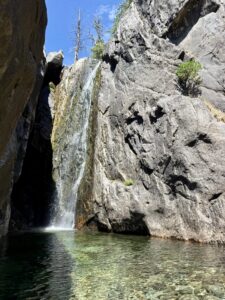
| Afternoon | • Swim in Rodgers Creek. Insider Tip: Bring an inner tube to float around in the emerald pools. Set up camp. Insider Tip: This campsite was tight for five people, two of us cowboy camped! |
| Evening | • Camp in the Grand Canyon of the Tuolumne |
Day 5
| Time | Activity |
|---|---|
| Morning | • Hike from Grand Canyon of the Tuolumne to Waterwheel Falls (8 miles). |
| Afternoon | • Set up camp. Insider Tip: Cross the river to secure one of the best campsites with riverfront access near the top of the falls! |
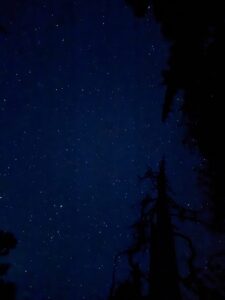
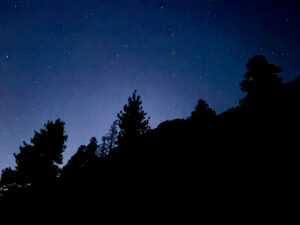
| Evening | • Camp at Waterwheel Falls. Such a beautiful starry night! |
Day 6
| Time | Activity |
|---|---|
| Morning | • Hike from Waterwheel Falls to Glen Aulin (4.4 miles). |
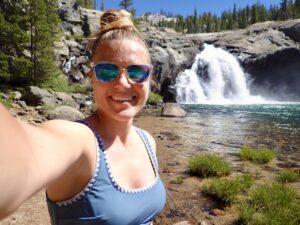
| Afternoon | • Set up camp. Insider Tip: Head to campsite 11 for one of the best group campsites with a creek. • Swim in Cascade Falls. Insider Tip: Such a great spot to watch wildlife like deer, butterflies, fish, birds, and bats. |
| Evening | • Camp at Glen Aulin. |
Day 7
| Time | Activity |
|---|---|
| Morning | • Hike from Glen Aulin to Tuolumne Stables (6.4 miles). |
| Afternoon | • Carpool from Tuolumne Stables to White Wolf Campground (45 mins). Insider Tip: If you didn’t drop a second car, then catch the Tuolumne Meadows Hiker Shuttle at Tuolumne Meadows Store. • Road trip from White Wolf Campground to Curry Village (1 hour) • Lunch at Bar 1899 with creative cocktails, on-tap beer, and a selection of burgers and warps. • Road trip from Curry Village to El Portal (1 hour) |
| Evening | • Dinner at Parkside Pizza. Pizza and salad hit the spot! • Night at Yosemite View Lodge. |
Day 8
| Time | Activity |
|---|---|
| Morning | • Road Trip from El Portal to LA (7 hours) |
* Some of the incredible photos featured in this photo journal were taken by our amazing family and friends (Maria, Nicholas, and Julia – thank you for capturing the adventure from your unique perspectives!).
Next Time Must Do’s
Would be great to visit Tenaya Lake again, such a perfect sandy shore for a swim, sunbathing, picnic, and soaking in the mountain views. Next time, we’re building in more quiet observation time at dawn and dusk, when the bears, falcons, and other animals we were hoping for are more likely to be moving.
Wilderness Wisdom

Every river we crossed on this route eventually reaches the Hetch Hetchy Reservoir and becomes San Francisco’s drinking water. So dish soap, sunscreen, bug spray, and body odor can travel downstream to someone’s tap. Leave No Trace guidelines ask backpackers to wash at least 200 feet from any water source, using only biodegradable soap sparingly, and to pack out anything that doesn’t break down because this is a water supply for millions of people.
When crossing rivers, following these safety guidelines:
- Unbuckle your pack’s chest strap and hip belt. If you fall, you need to be able to shed your pack immediately rather than get dragged underwater or downstream.
- Extend your hiking poles for a wider, more stable base of contact with the riverbed.
- Face upstream, into the current, rather than crossing sideways with the current pushing into your stance
- Form a people chain for wider or faster crossings by linking arms, moving as a unit rather than individually.
Trailside Ties

During our road trip, we listened to an audio book called The Nature Fix by Florence Williams. One concept that stuck with us was Kaplan’s attention restoration theory, or the idea that a landscape restores us best when offering just enough of a sense of mystery (a bend in the trail, a canyon you can’t see the bottom of). The Grand Canyon of the Tuolumne, with its switchbacks and blind corners around granite, is a literal example!
Photo Journal





















































Summary
Backpacking Yosemite’s Grand Canyon of the Tuolumne is a must, especially if you’re craving waterfall swims and a peaceful escape. Thirty-six miles of rivers, alpine lakes, waterfalls, and lingering snowcap mountains gave us exactly what we came for. We came home recharged, and that peace followed us back into the rhythm of everyday life.
Have you backpacked Yosemite? Drop a comment below — we’d love to hear how our trip compares to your route.
Check out our other favorite destinations!